
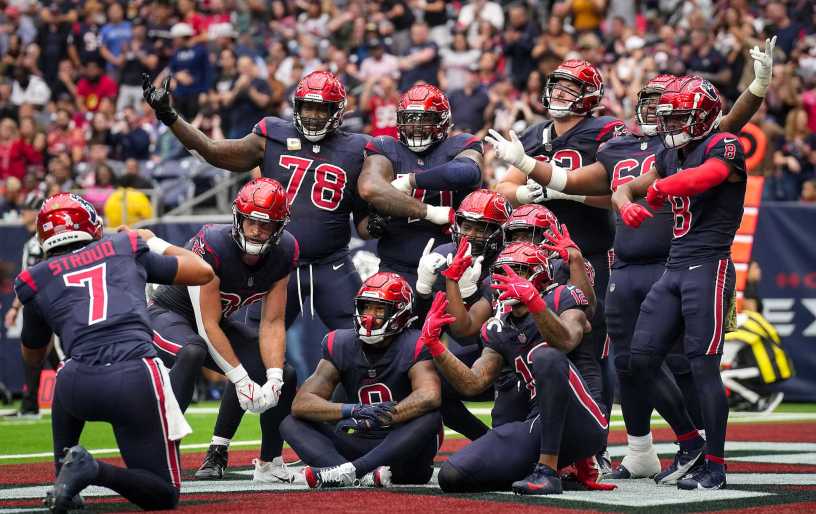
Image by Elizabeth Conley, Houston Chronicle
After covering the Houston Texans last offseason following their dramatic 2023-24 campaign, I’m back to break it all down once again. From the highs to the lows and everything in between, let’s dive into how this past season unfolded for the NFL’s youngest franchise, and more importantly, what the future holds.
Season Summary:
The Texans entered the season with high expectations, emerging as one of the newest contenders in a loaded AFC conference. With the Ravens and Bills losing key veterans in free agency, Houston capitalized on C.J. Stroud’s rookie contract, loading up on talent in both free agency and the draft. Along with the nine draft picks the Texans had, they were projected to be a legitimate threat to dethrone Mahomes and stop the Chiefs’ bid for a third straight Super Bowl title.
The Texans lived up to the hype early, starting 5-1 and looking like bona fide contenders. However, as injuries and offense struggles began to take their toll, the Texans limped into the playoffs at 10-7. Led by their defense, the Texans had an incredibly strong second half to beat the Chargers in the wild card round. However in the divisional round, a 4th quarter collapse at Arrowhead would end their season, once again. As dominant as the defense was, it ultimately was not enough to overcome the offensive woes that plagued the Texans all year.
Transactions:
As previously mentioned, the Texans capitalized on their cap space and draft capital to make a flurry of moves in an aggressive offseason. Along with acquiring defensive anchors in Danielle Hunter and Azeez Al-Shaair, the Texans also made trades for offensive weapons in Joe Mixon and Stefon Diggs. Additionally, Houston made some under the radar signings, including Mario Edwards and Tim Settle, further strengthening their roster top to bottom. In April, the Texans would go on to draft Kamari Lassiter, Blake Fisher, and Calen Bullock with their first three picks, all of whom instantly became impactful contributors who look to be key players for the future.
Stats Breakdown:
The data visualization below shows how Quarterback’s handled pressure, comparing pressure rate and sacks taken.

Data viz via Sam Disorbo (@analytacist)
As shown in the visualization, C.J. Stroud ranked 2nd in the league in sacks taken, trailing only Caleb Williams, and 3rd in pressure rate percentage, with over a quarter of his drop backs facing pressure. Simply put, the Texans offensive line consistently struggled, allowing defenders to penetrate and collapse the pocket, putting Stroud under constant duress. While Stroud is a proficient pocket passer, he needed time to go through his progressions that his offensive linemen simply didn’t provide. Other contributing factors that work to explain Houston’s high pressure rate and sacks taken that can be seen on film include poor running back pass protection and the longer time it took for plays designed by offensive coordinator Bobby Slowik to develop.
Another data visualization highlights a key theme of the Texans season: offensive performance in each half of games.

Data viz via Sam Disorbo (@analytacist)
This visualization compares teams’ average scoring output in the first and second halves. The Texans were middle of the pack in first half scoring, averaging just over 12 points per first half, but they struggled significantly in the second half, averaging fewer than 10 points. For reference, this second half number was comparable to many non-playoff teams. This drop-off suggests that Houston failed to effectively adjust its offensive strategy over the course of games, resulting in a noticeable drop in production as opposing defenses adjusted.
Of course, it wasn’t all bad for the Texans, as they still reached the divisional round of the playoffs. Their defense was among the league’s best, as shown in the data visualization below.

Throughout the season, Houston’s defense consistently ranked amongst the league’s best in both passing and rushing situations. The Texans also consistently forced elite quarterbacks to underperform. League MVP, Josh Allen, had his worst game of the season against Houston in Week 5, completing just 9 of 30 passes for 131 yards and a touchdown. In fact, Josh Allen’s QBR of 63.0 was the lowest of his career. The Texans also shut down Jared Goff, an MVP candidate at the time, holding him to 15 of 30 passing for 240 yards and two touchdowns, while forcing a career high five interceptions. This performance was the first five interception game since Jameis Winston’s famous 30 touchdown, 30 interception season in 2019.
Personal Thoughts:
The Texans defense was good enough to compete for a Superbowl last season; the problem was clearly the offense. Recognizing this, Houston has already made a major change, parting ways with Bobby Slowik and hiring Nick Caley as their new offensive coordinator for 2025.
The top priority for the Texans should be fixing the offensive line, either through free agency or the draft. Additionally, with Tank Dell likely out for 2025 due to injury, and Stefon Diggs expected to leave in free agency, the Texans need to bolster their wide receiver room, upgrading the depth behind Nico Collins.
2025 is a crucial year in Houston – The Texans have one final season where they can operate with cap flexibility before they have to hand out massive contract extensions to both C.J. Stroud and Will Anderson Jr. With smart moves in free agency and the draft as well as some improvement from the offensive coordinator position, the Texans are poised to make some noise in the AFC.
Conclusion:
Overall, the Texans’ 2024 season was largely a disappointment. They ended up in the same place as they were after the 2023 season, despite significantly higher expectations; the offense, in particular, fell short. However, the defense was elite and there are clear avenues for improvement on the offensive side of the ball, with foundational players at key positions already established. The pieces to contend are there, it’s now up to the front office to make the right moves and turn potential into prowess.
 M-FANS